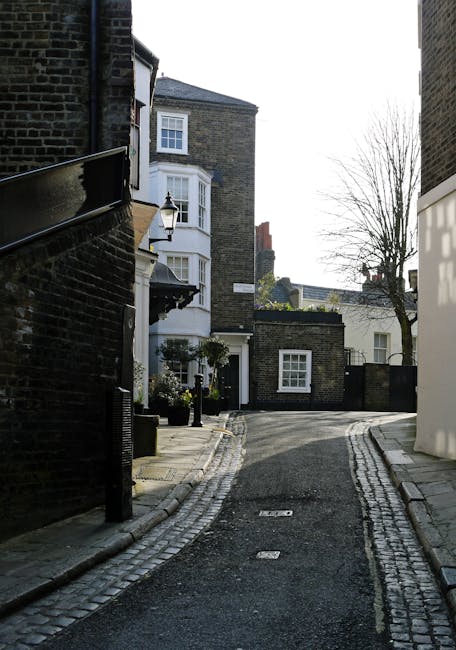
Frognal to Hampstead Heath: Best Local Removals Routes
Posted on 27/04/2026
Moving between Frognal and Hampstead Heath can look simple on a map, but anyone who has tried to thread a van through north London knows the reality is a little more nuanced. Narrow residential roads, parked cars, school runs, weekend footfall, and the occasional awkward loading bay can turn a short move into a slow one if the route is chosen badly. That is why Frognal to Hampstead Heath: Best Local Removals Routes is not just a transport question; it is a planning decision that affects timing, handling, costs, and how calm the day feels.
This guide breaks down the local route logic, explains what makes a removal route efficient, and shows how to prepare so the move stays smooth from first lift to final unload. Whether you are moving a flat, a family home, or a few bulky items, the right route and the right preparation can make all the difference. If you are also getting ready to pack properly, you may find our practical guide to smarter packing for a hassle-free move useful.
For many people, the real goal is simple: avoid delays, protect furniture, and keep the day predictable. That is exactly what good route planning does. And yes, it can save a surprising amount of stress.

Why Frognal to Hampstead Heath: Best Local Removals Routes Matters
At first glance, Frognal and Hampstead Heath are close enough that route planning may seem like a minor detail. In practice, short-distance removals often need more care than longer motorway moves because the vehicle spends most of its time dealing with local streets rather than cruising at speed. One badly chosen turning can cause a chain reaction: wasted minutes, awkward reversing, stressed neighbours, and more lifting than necessary.
The best local removals routes are not simply the shortest line on a sat-nav. They are the routes that balance access, vehicle size, timing, parking availability, and the shape of the items being moved. A piano, a sofa, a double bed, or a stack of boxes each behaves differently inside a van. If your loading point is awkward, the route matters even more because every extra carry step adds time and physical strain. For that reason, heavier jobs often pair route planning with specialist handling, such as piano removals in Frognal or more general furniture removals support.
There is also a trust factor. When a removal company knows the local road pattern, typical pinch points, and where access gets tight, it can quote more accurately and plan more safely. That matters whether you are arranging a full move or booking a smaller man and van service in Frognal.
Expert summary: on local moves, the "best route" is usually the one that reduces walking distance, avoids bottlenecks, and gives the van the cleanest possible approach to the property.
How Frognal to Hampstead Heath: Best Local Removals Routes Works
A good removals route is chosen in layers. First comes the broad route between the two areas. Then comes the street-level approach: where the van can stop, how long it can stay there, whether a bay or curb space is realistic, and how the items will be carried from front door to vehicle. This is where removals become a practical logistics exercise rather than just transport.
In the Frognal and Hampstead Heath area, route planning often needs to account for residential streets that can become congested at predictable times. School drop-off, commuter periods, local shopping traffic, and weekend leisure movement around the Heath can all affect speed. A route that looks fine at 10 a.m. may be noticeably slower at 8:30 a.m. or mid-afternoon on a busy Saturday.
Professional movers usually consider three core questions:
- Which road sequence keeps the vehicle moving with minimal stopping?
- Where can the van safely load and unload without blocking access?
- How will the route affect the carry distance for the heaviest items?
That last point is often overlooked. A shorter vehicle route is not always the best overall move if it leaves the team parking far from the entrance. In many cases, a slightly longer road approach with easier stopping can be quicker and safer in the end. If your move includes a full property change, it can help to review house removals in Frognal alongside your route planning.
There is also the question of load order. A route works best when the van is packed in the sequence that matches the drop-off plan. Bulky items such as mattresses and wardrobes should not be buried behind boxes if they are needed first. For beds specifically, the practical advice in this bed and mattress moving guide is worth reading before moving day.
Key Benefits and Practical Advantages
The right route does more than shave off a few minutes. It improves the whole quality of the move.
1. Less handling, less risk
Every extra step between the front door and the van increases the chance of bumps, slips, and awkward lifts. A route that gets the vehicle closer to the property can reduce that risk immediately. This is especially important for furniture with delicate edges, mirrored surfaces, or awkward weight distribution.
2. Better time control
Local removals are often judged by how efficiently the day is managed. A well-chosen route keeps the schedule realistic, which matters if you have keys to collect, cleaners arriving later, or a building access window to hit. If timing feels tight, a same-day or short-notice solution may be more appropriate, and same-day removals in Frognal can be a useful option in the right circumstances.
3. Lower stress for everyone involved
Stress usually rises when people feel the day is drifting. Good route planning reduces that drift. You know where the van is going, how long loading should take, and what the arrival sequence looks like. That confidence matters, especially for first-time movers or families juggling multiple tasks.
4. Better protection for possessions
Less carrying time usually means less vibration, fewer accidental knocks, and less chance of over-handling items. Careful packing still matters, of course. If you want a more robust approach to boxes, wrapping, and protection, see the practical advice on packing and boxes in Frognal.
5. Easier coordination with support services
Local routes can be planned around storage, cleaning, and disposal needs. If you are decluttering before the move, it can make sense to arrange storage or rehoming in advance. Our article on getting ready to move and decluttering well is a strong companion read.
Who This Is For and When It Makes Sense
This kind of route planning is useful for almost anyone moving between Frognal and Hampstead Heath, but some situations benefit more than others.
Ideal for:
- Flat moves with limited street access
- Family home removals with larger furniture
- Student moves where time windows are tight
- Office relocations needing a clean schedule
- Single-item moves, such as sofas, beds, or instruments
Especially helpful when:
- You have narrow stairwells or a top-floor flat
- Parking near the property is limited
- You are moving during a busy local period
- The load includes fragile or heavy items
- You want the move completed in one clean run
Students and renters often underestimate local friction. A short move can still become a long morning if the van cannot stop close enough to the door. That is why student removals in Frognal are usually best planned with efficiency, not optimism. Truth be told, optimism does not move a wardrobe.
Office moves bring another layer: business continuity. If staff need to be in and out quickly, route choice should prioritise a predictable arrival and unloading sequence. For that kind of move, office removals in Frognal are best handled with a simple, low-friction plan.
Step-by-Step Guidance
Here is a practical way to plan the move from Frognal to Hampstead Heath without overcomplicating it.
Step 1: Confirm what is actually moving
Start with the inventory. Make a quick list of furniture, boxes, appliances, and special items. This tells you whether you need a small van, a larger removal vehicle, or more than one run. It also helps you decide whether any items should be dismantled first.
Step 2: Match the vehicle to the access
Choose a vehicle size that fits the streets and the load. A larger van is not automatically better if parking is awkward. In some local moves, a compact removal van in Frognal is a smarter choice because it can manoeuvre more easily and reduce stop-start problems.
Step 3: Build the route around the property, not just the postcode
Look at where the van can stop at both ends. Think about corners, one-way sections, trees, low walls, and any access restrictions. If the route includes a building with communal entry, notify residents or management in advance where required. A short notice can prevent a long delay.
Step 4: Prepare the load before moving day
Pack systematically so the van can be loaded in a sensible order. Heavy items should be easy to reach, fragile items should be cushioned, and boxes should be labelled by room. If you need help packing efficiently, our packing guide gives practical methods that save time later.
Step 5: Protect larger items properly
Items such as sofas, mattresses, and soft furnishings should be protected against dirt, scuffs, and moisture. If a sofa needs to be stored before or after the move, the advice in professional sofa storage tips is a sensible reference point. If a freezer is being moved or left unused, do not forget the separate care it needs; see freezer storage tips for that side of the process.
Step 6: Keep the route flexible
If traffic or parking conditions change on the day, the plan should have a backup. A good mover does not cling to a route simply because it looked good on a map the night before. Real streets are messy. The plan should be, too, in the useful sense.
Step 7: Unload in room order
Once you arrive, take items to the correct room first and sort later. It is much easier to place furniture where it belongs immediately than to move it twice. This is especially true for heavy or bulky pieces.
Expert Tips for Better Results
A few small decisions can noticeably improve a local move.
- Move early if possible. Mornings often offer better access, calmer streets, and more predictable parking.
- Use clear labels. Room labels reduce confusion when unloading, especially if the new property has multiple floors.
- Strip furniture before moving it. Remove drawers, cushions, loose shelves, and detachable parts where safe to do so.
- Keep a "first hour" box separate. Put kettle, basic tools, chargers, tape, toilet paper, and a change of clothes in one clearly marked box.
- Protect stairwells and door frames. Blankets, corner guards, and careful spotting go a long way.
If you are handling anything unusually heavy, it is worth reading about proper body mechanics. Our piece on kinetic lifting explains the basic principles in plain English, while how to safely hoist heavy items solo covers the risks of trying to do too much alone.
For heavier or delicate specialty items, especially pianos, route planning should be paired with experienced handling. A few extra minutes spent planning is far better than a rushed lift and a repair bill nobody wanted.
Common Mistakes to Avoid
Most local moving problems are not dramatic. They are small, avoidable errors that snowball.
Choosing the route purely by distance
The shortest route on paper can be slower in practice if it includes tighter turns, heavier congestion, or poor stop locations. Access matters more than distance alone.
Ignoring parking reality
If the van cannot stop legally and safely close to the property, the whole move slows down. Even a near-perfect route fails when the unloading point is wrong.
Underestimating the size and weight of furniture
People often discover too late that the sofa was wider than the hallway, or that the bed frame needed dismantling. Planning should start with dimensions, not assumptions. If you have a bed to move, the mattress and frame guidance linked above will help avoid a common headache.
Not preparing for building rules or access windows
Some properties have booked lifts, loading restrictions, or management procedures. Missing those details can cost time or force a reschedule.
Leaving packing to the last minute
Half-packed boxes are awkward to carry and harder to stack securely. They also increase the chance of breakage. If you tend to leave packing until the night before, you are not alone, but it is rarely a pleasant hobby.
Forgetting cleaning and disposal
Move-out day often includes cleaning, rubbish removal, and a final sweep. If you want the departure side to look polished, this move-out cleaning guide is worth keeping open in another tab.
Tools, Resources and Recommendations
You do not need a warehouse full of equipment to move well. A small set of practical tools is usually enough.
- Sturdy boxes and tape: for predictable stacking and secure transport
- Furniture blankets: for protecting finishes and corners
- Ratchet straps or load restraints: for keeping items stable inside the van
- Dollies or sack trucks: for safer movement of heavier items
- Labels and markers: for quick room-by-room unloading
- Mattress covers and shrink wrap: for keeping large soft items clean and dry
If you need somewhere to keep items between properties, short-term storage can be a sensible bridge. You can review storage options in Frognal if timing is not lining up neatly.
For background on the company's approach to trust, responsibility, and service quality, the pages on about us, services overview, and insurance and safety are useful starting points.
Law, Compliance, Standards, or Best Practice
Local removals are mostly a practical service, but there are still important standards and responsibilities to keep in mind. The most relevant ones are usually around road use, parking, safe lifting, and fair handling of property. Exact requirements can vary depending on the road, building, and local authority, so it is sensible to check the specifics for your move rather than assume.
Best practice usually includes the following:
- Safe parking and loading: the vehicle should be positioned without creating unnecessary risk or obstruction.
- Manual handling care: heavy lifting should be planned, shared where possible, and performed with suitable technique.
- Clear communication: everyone involved should know arrival times, access points, and item priorities.
- Property protection: door frames, floors, and communal areas should be handled respectfully.
- Transparent service terms: pricing, scope, and responsibilities should be understood before the move begins.
If you want to review how a provider frames its obligations, the terms and conditions, health and safety policy, payment and security information, and complaints procedure are all relevant trust pages. For sustainability-minded customers, recycling and sustainability is also worth a look.
One practical note: if you are ever unsure about access, lifting limits, or whether a particular item needs special care, ask before moving day. That is much easier than trying to solve the problem beside a curb with a sofa halfway out the van.
Options, Methods, or Comparison Table
Different move types call for different approaches. Here is a simple comparison to help you choose the right one.
| Method | Best for | Strengths | Watch-outs |
|---|---|---|---|
| Self-drive van | Small, simple moves with flexible timing | Direct control, potentially lower cost | You manage driving, loading, parking, and lifting yourself |
| Man and van | Flats, student moves, and single-item transport | Efficient for local routes and lighter loads | May be less suitable for larger multi-room homes |
| Full removal service | House moves, complex access, heavy furniture | More support, better coordination, less strain | Usually needs more planning and a fuller inventory |
| Split move with storage | Moves with timing gaps between properties | Useful when keys, contractors, or renovations are out of sync | Requires extra handling and storage planning |
For many people moving between Frognal and Hampstead Heath, a man with a van in Frognal hits the sweet spot: flexible enough for local access, practical enough for real furniture, and usually simpler than a large-scale move. That said, if the property is large or the load is awkward, a broader removal service in Frognal can be the better call.
Case Study or Real-World Example
Consider a typical local move: a two-bedroom flat in Frognal, with a sofa, dining table, bed frame, mattress, several boxes, and a small bookcase, all heading toward a property near Hampstead Heath. On paper, the journey is short. In reality, the job succeeds or fails based on access.
In this scenario, the most effective approach is usually to:
- confirm the largest item dimensions before booking
- reserve the easiest possible loading position near the property
- pack the most fragile boxes separately
- load the van so the bed and sofa are accessible first
- time the move to avoid the busiest local period
The reason this works is simple. The removal team can get in and out with fewer interruptions, and the customer avoids the common "where do we park?" problem that can eat up the best part of half an hour. That is usually enough to make the whole day feel calmer and more professional.
Another useful example is a mixed household move where some items are going into storage first. In that case, the route should be designed around the storage stop, not just the final destination. It is worth revisiting the storage option early and protecting bulky items properly, especially if the sofa is going to wait in transit for a while.
Practical Checklist
Use this checklist to keep the move on track.
- Confirm the full inventory of items to be moved
- Measure large furniture and check access points
- Choose a van size that matches both load and street access
- Plan parking or loading space at both ends
- Label boxes by room and priority
- Pack fragile items separately and cushion them well
- Dismantle suitable furniture in advance
- Protect floors, walls, and door frames where needed
- Keep essentials in a clearly marked first-night box
- Check whether storage, cleaning, or disposal support is needed
- Review terms, insurance, and service scope before the move
- Leave a realistic time buffer for local traffic or access delays
If you want to strengthen the move further, reviewing the guidance on reducing house-moving stress can help bring the practical details together.
Conclusion
When you strip away the noise, the best removals route from Frognal to Hampstead Heath is the one that makes the whole move easier: easier to load, easier to park, easier to protect your belongings, and easier to keep on schedule. Short local journeys still demand smart planning, especially in an area where access can be tight and timing matters.
Choose the route with the best access, prepare your items properly, and match the vehicle and service level to the actual job. That simple combination removes most of the friction people normally associate with moving day. It is not glamorous, but it works.
If you are planning a move and want support that fits your property, timing, and route needs, the next step is straightforward: compare service options, check access, and book early enough to avoid last-minute pressure.
Get a free quote today and see how much you can save.